

Students should consider various features when buying a smartphone because the student phase of life is very important. During this phase, you should choose a smartphone that matches your needs, lifestyle, and mindset.
For example, some students want things to happen quickly in real life. They may have the same expectation from their smartphone and want everything to work fast. For such students, performance becomes an important factor. They may look at the processor, computing power, app-loading speed, and overall responsiveness of the smartphone.
In this article, we are not discussing a particular smartphone or going into the technical details of any specific model. Instead, we are trying to understand the student mindset while buying a smartphone.
On Prasnamañca, an engineering student shared his experience and explained his method of choosing a smartphone. According to him, three important things students should consider are battery, display, and performance.
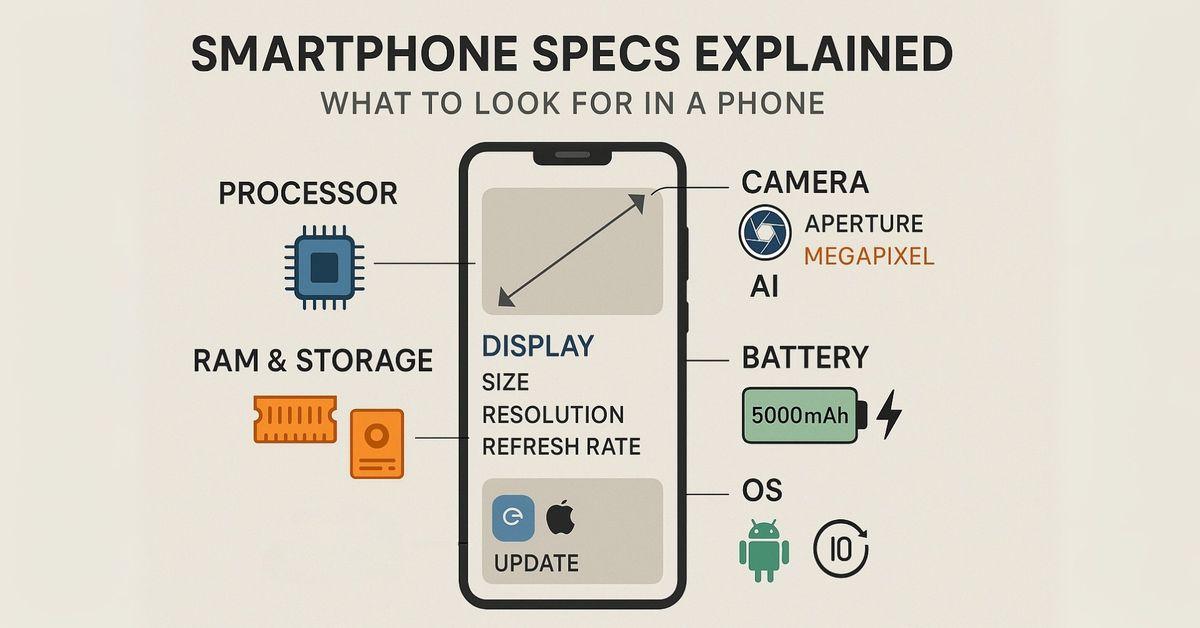
Why Battery, Display, and Performance?
During the student phase, many people have a tendency to explore the world, try new things, and gain recognition. This mindset can also influence the way they choose a smartphone.
1. Battery
Battery is one of the first things students should consider.
The battery stores the electrical energy used by the smartphone. You may see specifications such as 5000 mAh or 6000 mAh when looking at smartphones. In simple terms, a higher mAh capacity generally means the phone can store more energy, although actual battery life also depends on the processor, display, software, network usage, and other factors.
A larger battery can be useful, but there can be trade-offs. It may make the smartphone heavier or affect its design.
So, instead of simply asking, "How much battery does this phone have?", ask yourself:
"What do I actually do on my phone every day?"
If you mainly use your smartphone for calling, messaging, browsing, social media, and watching videos occasionally, a moderate battery capacity may be enough.However, if you regularly play games, edit videos, use demanding applications, or perform other intensive tasks, you should consider a smartphone with a larger battery and good battery efficiency.
2. Display
The display is another important factor, especially for students who spend a lot of time watching videos, movies, or educational content.
If you enjoy watching movies and web series, you should consider display quality, brightness, resolution, refresh rate, and the type of display panel.
You may come across terms such as OLED and AMOLED when comparing smartphones. AMOLED is actually a type of OLED display technology. Both can provide excellent image quality and deep blacks, while power consumption depends on several factors such as brightness, refresh rate, and how the display is being used.
Therefore, don't choose a display simply because it has a particular name. Consider how you will actually use your smartphone.

3. Performance
Performance is another major consideration for students.
The smartphone's processor, or chipset, handles many of the tasks required to run applications, process information, and provide a smooth user experience. From opening applications to gaming, video editing, and other demanding tasks, the chipset plays an important role.
However, don't look at the processor alone.
RAM is also important because it helps the smartphone keep applications and data readily available for quick switching and multitasking.
So, when comparing smartphones, look at the combination of:
Chipset + RAM + Storage + Software Optimization
Together, these factors have a major impact on how fast and smoothly a smartphone feels in everyday use
Another engineer, this time from the Computer Science field, mentioned all the points above but also said that the camera is important. But why?
As you know, everyone creates memories in life, and a camera helps us capture and store those memories. So, having a good camera is important, but it is not the only thing.
The phone's image processing and optimization technology should also be good so that photos look better and more natural.
This engineer also believes that if a student wants a smartphone with these features, the budget could be around ₹20,000 to ₹40,000 or more.
According to him, there is no fixed upper limit for a smartphone budget. A good phone for a student can be found within this range, but if someone wants better features, they can also spend more.
So, this is how a Computer Science engineer thinks about what students should consider when buying a smartphone.
Conclusion
For a student, buying a smartphone should not be about simply choosing the phone with the highest specifications.
Instead, think about your own requirements.
What do you use your smartphone for?
How much battery do you need?
How important is the display to you?
What level of performance do you actually require?
The best smartphone for a student is not necessarily the most expensive or most powerful one. It is the one that matches the student's needs, usage, and budget.
From my point of view
As a student you don’t need a costly phone. What you need is a good storage and ram (128 GB/8GB) is enough.